Rum is the simplest spirit to describe and one of the hardest to make well. Ferment a sugar, distil it, put it in a barrel. Four stages, no legal maze to navigate, no mandated recipe. Which is precisely the problem: when the rules do not force quality, every decision falls to the producer.
Here is what actually happens between the cane field and the glass — and, more usefully, where each stage can go wrong.
1. The sugar
Every rum begins as sugarcane, but not in the same form.
Molasses is the most common starting point: the dark, viscous residue left after sugar crystals are extracted from cane juice. It is roughly half sugar, and the rest — minerals, trace organics, caramelised compounds — is flavour waiting to happen. Molasses is stable, shippable, and available year-round, which is why the overwhelming majority of the world's rum is made from it.
Fresh cane juice is the alternative, and a much less forgiving one. Pressed cane begins fermenting almost immediately and cannot be stored, so production is tied to harvest and to the field's proximity. The resulting style — rhum agricole in the French tradition — is grassier, more vegetal, and unmistakable.
Neither is better. They are different raw materials producing different spirits, and a producer's choice here sets the ceiling for everything downstream.
2. Fermentation — where most of the flavour is decided
This is the stage the public thinks least about and the one that matters most.
Yeast is added to diluted molasses or cane juice and converts sugar into alcohol and carbon dioxide. That is the textbook version. What the textbook underplays is that yeast produces hundreds of aromatic compounds along the way — esters, higher alcohols, acids — and the conditions determine which ones dominate.
Three levers do the work:
- Yeast strain. A clean cultured strain gives precision and repeatability. Wild or house strains give character and risk. Some distilleries in Jamaica ferment with ambient microflora and bacteria deliberately, producing the enormous fruity esters — banana, pineapple, glue — that define "funky" high-ester rum.
- Temperature. Cooler, slower fermentation preserves delicate fruit aromatics. Hot fermentation is faster and coarser.
- Duration. A fermentation can run twenty-four hours or two weeks. Long fermentations build ester complexity; short ones make neutral, high-volume spirit.
A rum's personality is largely set here, before it ever meets copper. You cannot distil in flavour that fermentation did not create — distillation can only select from what already exists.
3. Distillation — selecting, not creating
Two families of still dominate, and the choice is a genuine fork in the road.
Pot stills work in batches. They are inefficient in the best sense: heavy, oily, aromatic compounds survive the process, so the spirit arrives full-bodied and expressive. Pot-still rum tastes like where it came from.
Column stills run continuously and can be operated to strip a spirit to near-neutrality. They are the reason light, mixable rum exists at industrial scale — cleaner, lighter, more consistent, and less interesting on its own.
Many of the best rums in the world are blends of both, using column spirit for structure and pot spirit for voice.
Whichever still is used, the distiller's real craft is the cut — deciding which portion of the run to keep. The first vapours off the still (the heads) carry volatile, solventy compounds. The tail end brings heavy, sometimes unpleasant oils. Somewhere in the middle is the spirit worth keeping, and the boundaries are not marked. Cut too narrowly and you throw away character along with the faults. Cut too generously and you keep faults along with the character. This is judgement, made by nose, and it is the difference between a competent distillery and a good one.
4. The barrel
New spirit off the still is clear, hot, and unfinished. Oak does the rest, in three ways at once: the wood gives vanilla, caramel, coconut, and tannin; the char layer removes sulphury and green notes by adsorption; and slow oxygen ingress transforms harsh compounds into the dried-fruit depth we read as age.
Two variables then decide the outcome.
Which barrel. Most rum ages in used American oak — typically ex-bourbon, since US law forbids bourbon from reusing a cask. A second-fill barrel gives up its flavour more slowly, letting the spirit stay legible. From there, producers can finish in almost anything: sherry, port, cognac, wine casks. Every previous occupant leaves something behind.
Where the warehouse is. Heat accelerates everything. In cool climates a barrel loses around two percent a year to evaporation — the angel's share. In tropical conditions that figure commonly runs two to four times higher, with extraction speeding up to match. Tropical aging is faster, more intense, and considerably more expensive, because so much less rum comes out than went in.
This is why an age statement alone tells you little. Eight years in the heat is a different eight years — how aging changes rum takes that apart age by age.
The stage nobody talks about
After aging comes blending, and then a decision that separates the category into two camps.
In most of the world, rum may legally be sweetened, coloured, and adjusted after distillation, with no obligation to say so. Sugar dosing is widespread. It makes a young or thin rum taste rounder and more expensive, and it is the single biggest reason a category capable of extraordinary spirits is still fighting for the respect that whisky takes for granted.
The alternative is to let the barrel do the work and accept the slower, lossier, more expensive path — nothing added, nothing forced. That is a choice each producer makes quietly, and the only way to know is to taste young and old expressions side by side and see whether the sweetness tracks with age or arrives fully formed.
What this looks like in one building
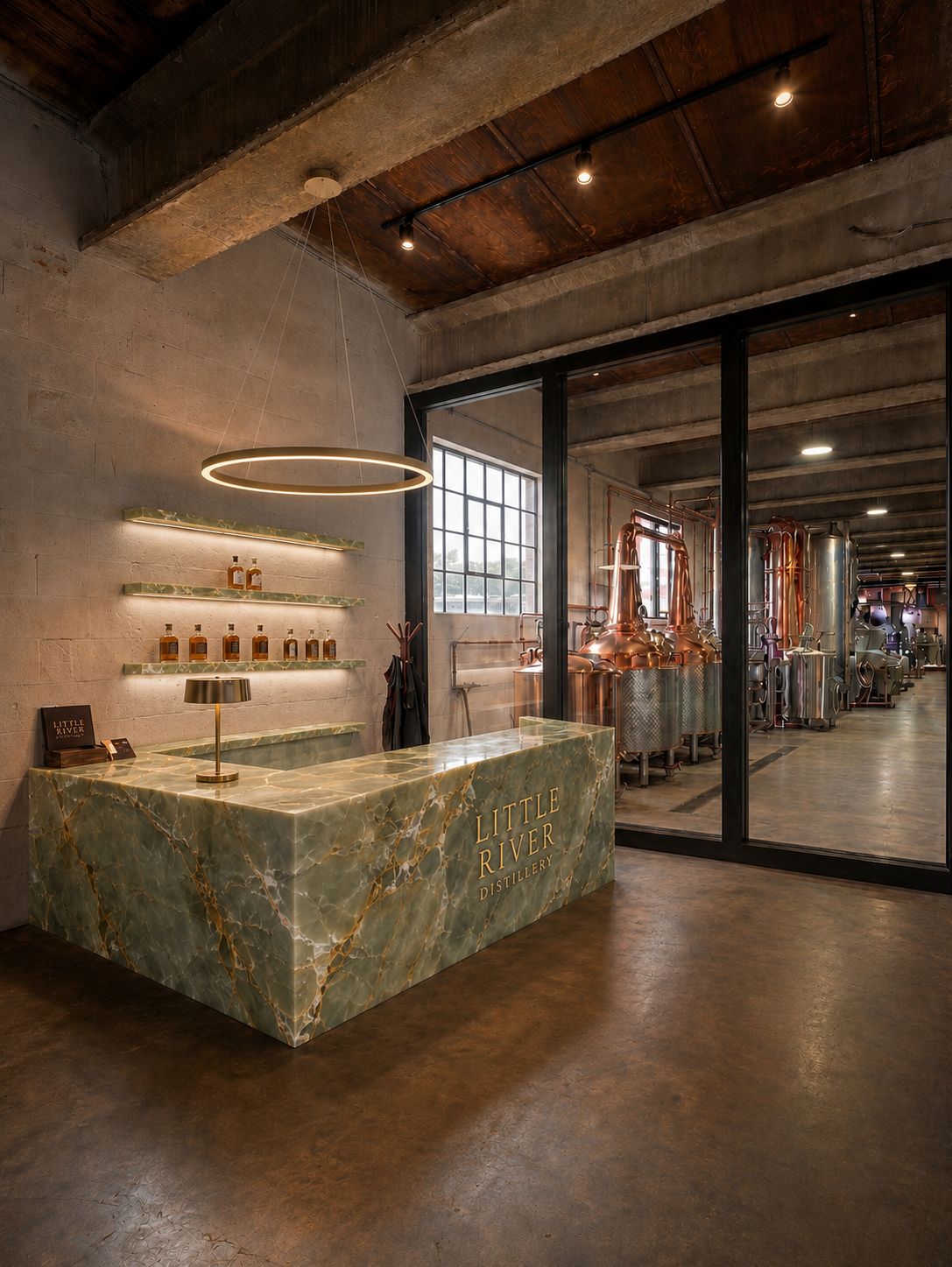
Reading about fermentation temperature is not the same as standing next to a fermenter. The reason we run distillery tours is that the whole chain is under one roof here in Little River: the ferment, the copper, the barrel warehouse where Miami heat is doing the expensive part, and a tasting room at the end of it where you can check the theory against our four expressions of the same spirit.
Come see which of those four you actually prefer. Most people are surprised.