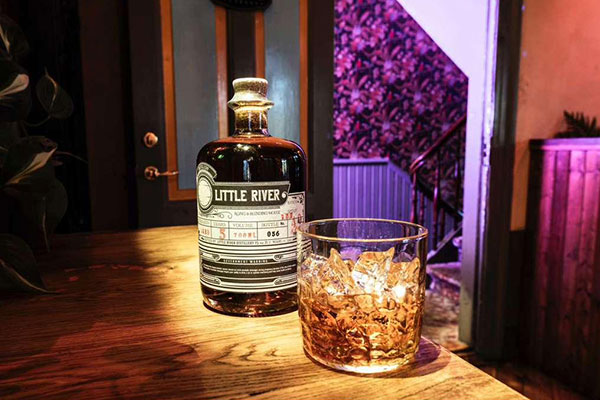
If you like bourbon, you are closer to liking aged rum than you think. Both are distilled from a sugar source, both spend years in charred oak, and both end up with vanilla and caramel in the glass. Plenty of people who order an Old Fashioned by reflex would prefer it made with eight-year rum, and never find out.
But the two are not interchangeable, and the differences are more interesting than "one is from sugarcane."
The raw material
Bourbon starts with grain. By US law the mash must be at least 51% corn, with the remainder usually rye, wheat, or malted barley. Grain has no accessible sugar, so before fermentation can begin the starch has to be cooked and converted by enzymes. That extra step is why whiskey production involves mashing at all.
Rum starts with sugar. Either molasses — the thick, mineral-heavy byproduct of sugar refining — or fresh-pressed cane juice, which produces the grassier style found in rhum agricole. Either way the sugar is already there. Yeast can get to work immediately.
That single difference cascades through everything else. Grain gives bourbon its cereal backbone: the bread-crust, nutty, sometimes peppery character underneath the barrel notes. Cane gives rum a fruit-forward, faintly tropical base that can go anywhere from delicate to enormously funky depending on fermentation.
The rules
This is where the two categories genuinely diverge, and it is not a small thing.
Bourbon is tightly defined. To be called bourbon it must be made in the United States, be at least 51% corn, be distilled to no more than 160 proof, enter the barrel at no more than 125 proof, be aged in new charred oak containers, and be bottled at 80 proof or higher. Nothing may be added but water. "Straight bourbon" means at least two years in wood.
Rum is barely defined at all. Rules vary by country and, in some places, hardly exist. Age statements mean different things in different jurisdictions. Most consequentially: in much of the world, sugar, glycerol, and colouring can be added to rum after distillation without appearing on the label.
That regulatory looseness is why rum's reputation lags its quality. A category where a producer can sweeten the product and still call it aged rum is a category where the buyer cannot fully trust the label. The best rum producers in the world compete under rules that would let them cheat, and choose not to. We are one of them — nothing added, nothing forced, and the sweetness in our older expressions comes from wood and time.
The barrel
Here is the detail most people miss, and it explains a great deal about how the two taste.
Bourbon must use new charred oak. Every barrel gets one use, then legally cannot be used for bourbon again. Fresh oak is loud — aggressive vanilla, coconut, heavy caramelised sugars, fast colour.
Those used barrels then go on to age most of the world's other spirits, rum included — there is more on what the cask actually does in how aging changes rum. A second-fill barrel gives up less, more slowly, which lets the spirit inside stay legible instead of being buried in wood. And because rum has no requirement to stay in one type of cask, producers finish in whatever the flavour calls for — sherry casks, cognac casks, port pipes, wine barrels. Our five-year finishes in Spanish oak that held cherry wine; our eight-year in French oak that held cognac.
Put simply: bourbon's barrel rule guarantees consistency; rum's barrel freedom permits range. Bourbon is a category with a house style. Rum is a category with dialects.
The climate
Bourbon ages in Kentucky. Rum, mostly, ages in the tropics — and heat is not a minor variable.
In a temperate warehouse, a barrel loses roughly two percent of its contents a year to evaporation. In tropical conditions, that loss commonly runs two to four times higher, and extraction from the wood accelerates to match. A tropically aged rum matures faster and harder than a whiskey of the same stated age.
Which is why comparing age statements across the two is a category error. An eight-year rum aged in Miami heat has had a more eventful life than an eight-year bourbon in a cool Kentucky rickhouse — and considerably less of it survived to be bottled.
In the glass
Tasted side by side, at similar ages and proofs:
- Bourbon tends to lead with sweet corn, baking spice, and a drying oak finish. Rye in the mash adds pepper; wheat softens it. The grain is always somewhere in the picture.
- Aged rum tends to lead with dried fruit, vanilla, and caramel, with a rounder, less astringent mid-palate. Cane character sits underneath rather than cereal.
- Texture is often the giveaway. Rum frequently feels silkier; bourbon tends to grip harder at the finish, courtesy of all that fresh oak tannin.
Which cocktails care
Some drinks are remarkably indifferent to the swap. Others are not.
An Old Fashioned made with aged rum is excellent — arguably better in warm weather, since the fruit notes lift where bourbon's oak sits heavy. A Manhattan is more delicate: rum can work beautifully, but the vermouth needs adjusting, because you have removed the rye spine the drink was designed around. A Daiquiri in bourbon is simply a different, worse drink; that cocktail exists to showcase cane. And a Mai Tai built on eight-year rum is one of the genuinely great cocktails of the twentieth century, ruined by decades of bad interpretations.
The rule of thumb: where the drink is built on citrus, use rum. Where it is built on bitters and vermouth, either can work — the question is what you want in the top notes.
If you like one, try this
Bourbon drinkers usually get on best with a rum aged in ex-bourbon oak — the vanilla-and-caramel framework is familiar, and the cane base reads as a variation rather than a departure. Start around three to five years, neat, in a glass that narrows at the top. Then try the eight-year, and notice how much of what you like about bourbon was actually the barrel talking.
That is a much better argument tasted than read. Our guided rum tasting ends with exactly that flight — four ages of the same rum, in the warehouse where they aged.